

Key Highlights
- Short, regular reading-aloud sessions help build steady pacing and clarity.
- Everyday chats about photos and videos mirror the conversation component.
- A simple answer structure helps children organise ideas before speaking.
- Recording practice sessions lets children hear and adjust their delivery.
- Gentle, specific feedback keeps practice low-pressure and easier to sustain.
Getting Comfortable With Speaking Out Loud
For many families, the oral PSLE Chinese component feels harder to prepare for than the written papers. There’s no worksheet to mark and no model essay to compare against – just your child, the examiners and a few minutes to speak. Speaking skills tend to grow with steady, low-pressure practice, and a good part of that can happen at home. Below, we look at four practical areas to focus on when supporting your child through oral PSLE Chinese preparation, from reading aloud to handling the conversation segment with more ease.
Make Reading Aloud a Daily Habit
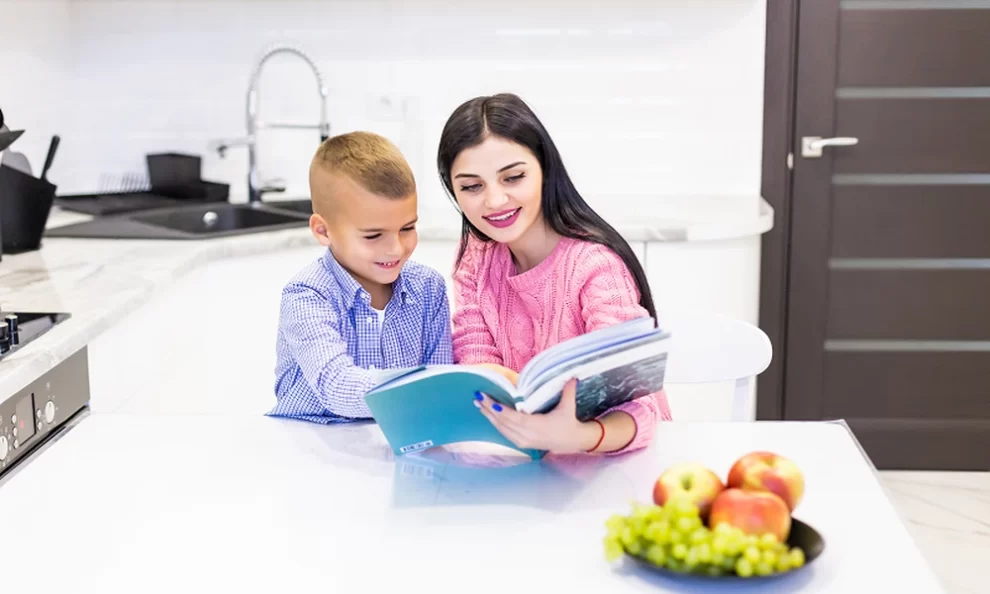
Reading aloud is one of the two main parts of the oral exam, and it’s also one of the easiest to practise in short bursts. Pick a passage from your child’s school textbook, a storybook or an article written for young readers, and set aside about ten minutes a day. Encourage them to read the passage silently first, so they can spot unfamiliar words before saying anything out loud. When it’s time to read, focus on steady pacing and clear pronunciation rather than speed. Over a few weeks, this routine can help your child approach the reading portion of oral PSLE Chinese with a calmer, more familiar rhythm.
Turn Everyday Moments Into Conversation Practice
The stimulus-based conversation asks children to watch a short video and then share their views and experiences. You can set up something similar at home with a few simple ideas:
- Talk about photos – ask your child to describe a family photo and how the people might feel.
- Discuss short clips – after watching a video together, ask what they would do in the same situation.
- Share daily stories – invite them to describe something that happened at school in full sentences.
- Swap roles – let your child ask you the questions, so they get used to the back-and-forth flow.
Little by little, these chats make the conversation part of oral PSLE Chinese feel less like a test.
Give Answers a Simple Structure
Some children know what they want to say but lose track halfway. A loose structure gives them something to lean on. Here’s one approach to try:
| Step | What Your Child Does | Example Prompt to Practise |
| Share a view | States their opinion in one or two sentences | “Do you like helping at home?” |
| Give a reason | Explains why they feel that way | “Why do you think so?” |
| Add an experience | Links the answer to something they’ve done | “Has this happened to you before?” |
| Wrap up | Ends with a short closing thought | “What would you do next time?” |
This isn’t the only way to answer, but it can help your child stay on track during oral PSLE Chinese practice.
ALSO CHECK OUT: Chinese Creative Writing: How Strong Composition Skills Can Help Your Child Improve Their PSLE Chinese Score
Keep Feedback Gentle and Specific
How you respond after each practice session matters as much as the practice itself. Instead of broad comments like “that was fine” or “try harder”, point to one specific thing – perhaps a word they pronounced clearly or an idea they explained well – and one thing to work on next. Recording sessions on your phone can also help, since children often notice their own pauses or rushed sentences when they listen back. Try to keep the mood relaxed, too. If your child feels nervous about oral PSLE Chinese, shorter and more frequent sessions are usually easier to manage than one long practice right before the exam.
Small Steps, Steady Progress
Preparing for the oral exam doesn’t have to mean long drills or stressful mock tests. Short reading-aloud sessions, casual chats about photos and videos, a simple way to organise answers and specific, encouraging feedback can all fit into a regular week without taking over family time. Consistency tends to matter more than the length of each session. A few minutes a day gives your child room to try, make small mistakes and adjust, which is often how speaking confidence develops. It also helps to remember that every child moves at a different pace. Some enjoy talking about videos, while others prefer reading stories together, so it’s worth adjusting your approach as you discover what suits your child.
Contact Hua Language Centre to find out more about Chinese lessons that can support your child’s oral preparation alongside your practice at home.






Add Comment