
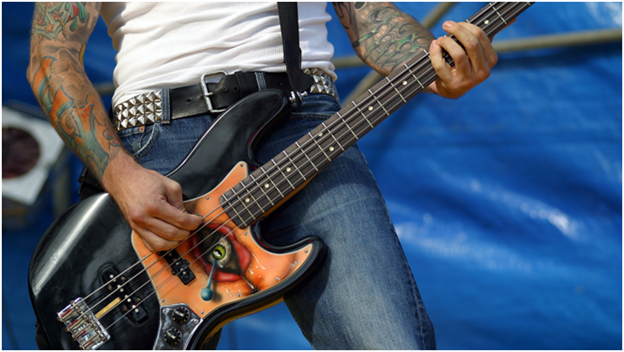

When it comes to bass playing, speed and dexterity aren’t just flashy tricks—they’re essential tools for navigating complex lines, locking in with the drummer, and exploring a wider range of musical styles. Whether you’re laying down a tight funk groove or tackling a melodic solo, improving your finger agility and hand coordination can dramatically elevate your sound.
But building speed and control doesn’t happen overnight. It takes consistent, targeted practice. The good news? With the right exercises and discipline, you can develop fluidity and power in your playing. Below are structured routines designed to help you build both speed and dexterity, whether you’re just getting started or looking to refine your chops.
1. The Finger Independence Warm-Up
Before diving into complex runs, it’s crucial to build strength and independence in each finger. A simple chromatic exercise can do wonders.
Exercise:
Start on the E string, play frets 1–2–3–4 using index, middle, ring, and pinky. Then move to the A string and repeat, continuing across all strings and back down.
Tip:
Use a metronome. Start slow (around 60 BPM), and increase speed gradually over time. Focus on clarity and evenness rather than speed at first.
Why it works:
This classic warm-up boosts coordination between both hands and improves finger control—foundations for faster playing.
2. String-Crossing Precision
Speed isn’t just about how fast your fingers move—it’s also about how accurately you move between strings.
Exercise:
Try playing a pattern like 1-2-3-4 on one string, then shift to the next string in reverse (4-3-2-1). Do this across all strings and back.
Tip:
Avoid unnecessary hand movement. Keep your fretting hand relaxed, and keep your plucking hand controlled to maintain a consistent tone.
Why it works:
You’ll build cross-string coordination and train your hands to work in sync, especially when shifting positions or navigating riffs that span multiple strings.
3. The Spider Walk
This exercise may look awkward, but it’s extremely effective for finger agility.
Exercise:
Start with your index finger on the 5th fret of the E string, middle finger on the 6th fret of the A string, ring finger on the 7th fret of the D string, and pinky on the 8th fret of the G string. Then “walk” your fingers across the neck in this staggered pattern.
Tip:
Take it slow, especially at first. The idea is to isolate each finger’s movement while keeping others steady.
Why it works:
It develops coordination and strength in all four fingers and helps break any over-reliance on just the index and middle fingers.
4. Scale Speed Drills
Practicing major, minor, and pentatonic scales in different positions is a great way to boost speed while staying musical.
Exercise:
Pick one scale (e.g., A minor) and run it up and down the neck in eighth notes, then sixteenth notes as you get faster. Use alternate plucking and keep a steady rhythm.
Tip:
Use a loop pedal or backing track to simulate real-time playing. This not only boosts speed but also improves timing and feel.
Why it works:
This drill improves finger memory, ear training, and transitions—all crucial for playing confidently in real-world settings.
5. Plucking Hand Workouts
Many bassists focus heavily on the fretting hand and forget the plucking hand plays an equal role in speed.
Exercise:
Practice “raking” exercises, double plucks, or triplets using just your index and middle fingers. Alternate these patterns at increasing tempos.
Tip:
Pay attention to tone and volume consistency between fingers. You want both hands working in unison for smooth, clean execution.
Why it works:
It builds endurance and stamina in your plucking hand, which is essential for playing fast lines over long periods without fatigue.
6. Syncing with a Metronome
Speed without timing is just noise. Every speed-building routine should be practiced with a metronome or click track.
Exercise:
Play any of the exercises above at a set tempo. Once you can play them flawlessly, increase the tempo by 5–10 BPM. Repeat this process daily or weekly.
Tip:
Challenge yourself by shifting accents—play triplets, quintuplets, or off-beat rhythms to improve rhythmic dexterity.
Why it works:
This method not only builds speed but also reinforces timing and discipline—key elements of professional-level playing.
7. Short, Focused Sessions
Avoid the temptation to cram speed drills into one long session. It’s more effective to do short, focused practice blocks throughout the week.
Routine Suggestion:
- 10 min: Finger warm-up
- 10 min: Spider Walk or String Crossing
- 10 min: Scale drills
- 10 min: Plucking hand exercises
- 10 min: Playing to a track or metronome
Tip:
Track your BPM progress weekly and celebrate small improvements.
Why it works:
Consistent, deliberate practice beats occasional marathon sessions every time. Your muscles need time to adapt and build muscle memory.
8. Structured Learning for Long-Term Growth
While self-directed practice is powerful, structured learning environments can offer professional feedback, guided routines, and progress tracking. An online bass program can help you develop not only speed and dexterity but also groove, tone, and musicality with expert guidance.
Building speed and dexterity on the bass takes patience, precision, and consistency. It’s not just about playing fast—it’s about playing clean, tight, and musically. By incorporating these routines into your daily or weekly practice, you’ll gradually develop the control and agility needed to play with confidence in any setting. Stick with it, and over time, you’ll notice not only faster fingers but also sharper timing, smoother transitions, and a stronger overall presence as a bass player.