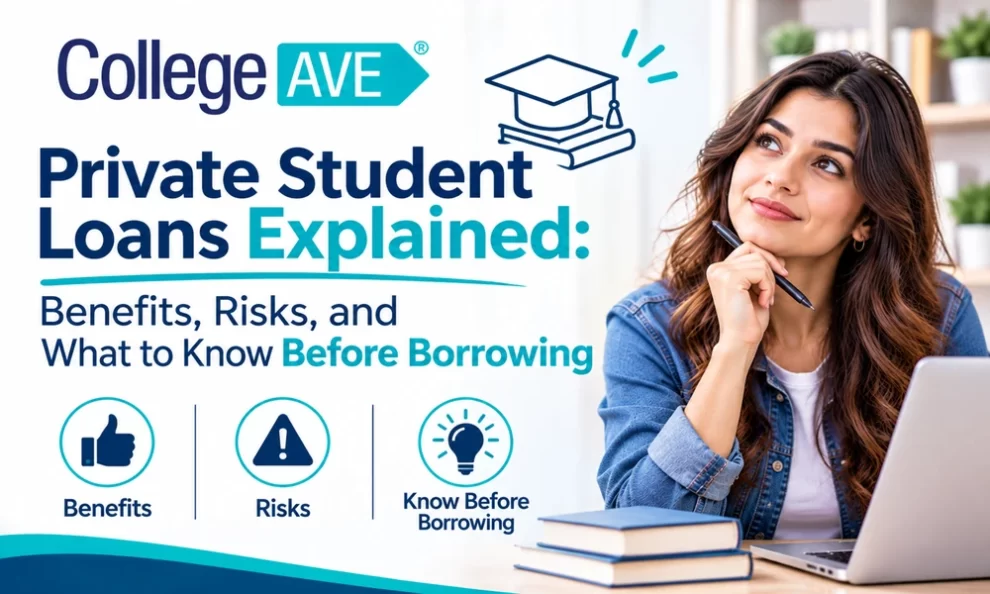

College expenses can quickly accumulate. The cost of attending college includes tuition, books, room/board and other fees that can strain your budget. If you cannot afford to attend college using only scholarships and/or federal aid, then taking out a private loan can assist in covering the difference. Before applying for a private loan, however, it is essential to understand what you receive from a private loan and what you will lose as a result.
The Benefits of Private Student Loans
Private lenders provide various types of loans (with different amount), different interest rates, and varying lengths of time to pay back the money. For some individuals who wish to borrow money, private lenders will likely have a type of loan option that fits what they are looking for.
Key benefits include:
- Extra funding: Cover costs that other aid does not pay.
- Flexible choices: Compare fixed and variable interest rates.
- Loan options: Choose from banks, credit unions, and online lenders.
- Possible discounts: Some lenders offer rate cuts for automatic payments.
The Risks You Should Not Ignore
Private loans usually involve a credit check. Students who do not have an established credit history will often need to find someone to sign on with them to be eligible. The interest rate that students are charged on private loans is sometimes greater than the interest rate they would pay if they had taken out a federal loan.
Private lenders do not provide the same types of income-based repayment plans that federal loans do, nor do they provide the same types of federal forgiveness programs. Your options for paying less than what is owed on your loan will also depend upon which private lender you choose.
Deciding on a private student loan depends on what you want to achieve with the loan, and understanding the pros and cons of taking out private student loans will help you determine if the loan is right for you.
Borrow with a Clear Plan
Prior to accepting the loan offer, you should evaluate the interest rate, the cost of borrowing (fees), and the length of time you will have to pay back the money (repayment terms). You should also review the loan documentation, and calculate how much money you will be required to repay each month based upon your projected income after graduation. Finally, you should examine what federal student assistance programs are available to assist you with paying for college prior to seeking private student loan financing.
Make an Informed Choice
Borrow only as much money as you’ll require and think ahead regarding how much income you may earn in the coming years. Making a cautious decision right now can make managing your debt less stressful once you graduate. Spend some time comparing various lenders and inquire about anything you don’t comprehend regarding the terms. Keep in mind that the best loan will assist in financing your college education, yet also allow you to continue working toward achieving your future financial objectives.







Add Comment